Showing posts with label kitchen garden. Show all posts

Sunday, 13 April 2014

How to grow marigolds at home |Best Tips For Growing yellow orange Marigold (Genda Phool ) in Container / Pot in balcony


Marigold is known as jhendu in marathi and genda phool in hindi.As advised by mom my first attempt of growing jhendu flowers started in hyderabad when i had planted yellow marigolds in my balcony


Second attempt was in bangalore where i planted seeds and this time mixed yellow maroon red marigold and orange marigold bloomed in my garden


the mixed yellow maroon red marigold is also known as pandharpuri jhendu in marathi.


.
For more information on marigold flower read this post 

Marigolds are easy to grow and they are available in a variety of colors, including white, yellow, orange, red and mixed colors.

They are also lasting plants that appear quite beautiful, no mater where they are planted.  Marigold Flowers will bloom from mid-summer all the way until frost. 

They can be used for indoor arrangements, You can collect the seed heads after the flowers are spent so you have fresh seeds for the following growing season. The process of removing dead flowers from the plant is called deadheading


 Marigolds also come in a wide range of sizes from miniatures smaller than a foot to giant varieties that can grow up to four feet tall! 

You can select the color and size that is perfect for your flower garden. 

And don't overlook Marigolds in container gardens as the smaller varieties do well in containers.

Apart from being beautiful, marigolds are even beneficial in many ways. They emit a specific kind of smell, which keep the insects away as they find it offensive. Thus, they can be grown in the vicinity of plants that are prone to be harmed by insects, such as tomatoes. 


Ingredients

Marigold flowers

pot/container with good soil


Method

1.you will need marigold flowers or you can even use marigold garlands.If you alraedy have a marigold plant in your garden than once flowers are bloomed remove the f from the plant

2. Break open the flower and dry the petals in sun .the black portion are the marigold seeds. Marigold seeds can be directly sowed into ground, or seeded indoors in small containers for transplanting later.

3. Fill a container/pot/kundi with a good quality potting soil. Moisten the soil completely and allow the container/pot/kundi to drain. Make evenly spaced holes about 1 inch apart and 1 inch deep in the planting medium (either ground or pot/container/kundi)


4 Throw few marigold seeds  in each hole. Cover the seeds with a fine layer about 1/4 inch of soil.While planting marigold seedlings, remember to sow them at the spot that receives full sun and has a rich, well-drained soil.


5 they germinate in about 1-2 weeks and you can see small marigold plants growing .

6 you can grow flowers in your conatiner like the way i did 


7 If you are lucky to have a garden than transplant Marigold plants into your garden. Spacing depends upon size with miniature varieties spaced four to six inches apart, and Giant varieties one to two feet apart.

Sunday, 30 March 2014

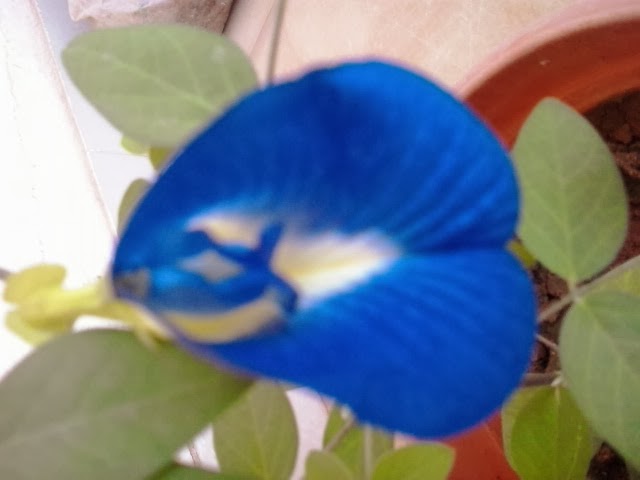
Gokarna flowers | how to grow gokarn shankhpushpa aparajita flowers


I have always loved this bright blue flower since my childhood.

generally these flowers are sen growing on a kaman (fence in english).Deep blue flowers with light yellow markings peeping out dense light green foliage. This is another flower which attracts butterflies of the winged variety. 
 had got a bunch of seeds planted them in a pot and to my surprise within 1 month i saw the plants growing 

I was delighted and my joy know no bounds when i saw the first beautiful blue flower today

This blue flower is named Clitoria ternatea, common names including butterfly-pea, blue-pea, and cordofan-pea, is a plant species belonging to the Fabaceae family.

It is called Butterfly pea, blue pea vine, mussel-shell climber, pigeon wings in English; Aparijita in Hindi and Gokarna or less commonly Shankhpushpa in Marathi.

gokarn means they resemble cows ears


the blue butterfly pea (Clitoria ternatea)is more common than the white one. It is a perennial, herbaceous vine mostly grown on fences. The leaves are pinnate with 5 to 7 lobes and give good foliage.
The botanical name Clitoria relates to the shape of the flowers which are almost 2 inches long and borne singly. The term ternatea comes from Ternate, a cone shaped island in Indonesia.
The most striking feature about this plant are its vivid deep blue flowers; solitary, with light yellow markings. They are about 4 cm long by 3 cm wide. There are some varieties that yield white flowers.
The fruits are 5 – 7 cm long, flat pods with 6 to 10 seeds in each pod. They are edible when tender.
It is grown as an ornamental plant and as a revegetation species (e.g., in coal mines in Australia), requiring little care when cultivated. As a legume, its roots form a symbiotic association with soil bacteria known as rhizobia, which transform atmospheric N2 into a plant usable form, therefore, this plant is also used to improve soil quality through the decomposition of N-rich tissue.
Uses

1.In traditional Ayurvedic medicine, it has been used for centuries as a memory enhancer, nootropic, antistress, anxiolytic, antidepressant, anticonvulsant, tranquilizing and sedative agent.
2.Extracts from the root and the flowers have a range of antimicrobial activity and is used in ayurvedic medicines. The extract contains biologically active peptides called cliotides which have potential to be lead compounds for novel antimicrobial and anticancer agents. Wow!
3.It is used to strengthen hair, improve eyesight and enhance immunity in Thai medicine. 

4 In Burma the flowers are dipped in batter and fried .The flowers can also be used to color food; grind the flowers with water or milk to get blue or with little lemon juice to get red color.

Saturday, 29 June 2013

How to grow Methi at home | growing fenugreek leaves in balcony


I love gardening .Thats the reason you will find different plants in my balcony .recently I  started out experimenting with growing vegetables.


First one was growing pudina (mint ) at home ,
next  was growing kothmir (coriander) at home
& third was growing methi aka fenugreek leaves at home.


I was delighted to taste tender fresh methi from my own garden very first time which i used to make andhra style methi dal
Growing methi is easy and fun and it hardly takes 2 weeks to grow leaves and ready to use.I used the  plastic containers which we get when we order a home delivery for dal makhani .
You can use a regular kundi or pot/aluminium tray,plastic dabba /plastic container


Information about methi
Fenugreek (/ˈfɛnjʉɡriːk/; Trigonella foenum-graecum) is an annual plant in the family Fabaceae. The plant has small round leaves, is cultivated worldwide as a semi-arid crop, and is a common ingredient in dishes from the Indian Subcontinent. It is known as methi in Marathi (मेथी), Punjabi, Hindi (मेथी), Urdu, Bengali (মেথি) and Nepali (मेथी), as menthiyam, and venthayam (வெந்தயம்) in Tamil, "uluhaal" (උළුහාල්) in Sinhala, Helba حلبة) in Arabic, menthya ಮೆಂಥ್ಯ ) in Kannada, uluwa (ഉലുവ) in Malayalam, and menthulu (మెంతులు) in Telugu.


Fenugreek has three culinary uses: as a herb (dried or fresh leaves), as a spice (seeds), and as a vegetable (fresh leaves, sprouts, and microgreens). Sotolon is the chemical responsible for fenugreek's distinctive sweet smell.

The distinctive cuboid-shaped, yellow-to-amber colored fenugreek seeds are frequently encountered in the cuisines of the Indian subcontinent. The seeds are used in the preparation of pickles, vegetable dishes, daals, and spice mixes, such as panch phoron and sambar powder. Fenugreek seeds are used both whole and in powdered form and are often roasted to reduce their bitterness and enhance their flavor.

Fenugreek is also used as a vegetable. Fresh fenugreek leaves are an ingredient in some Indian curries. The sprouted seeds and microgreens are used in salads. When harvested as microgreens, fenugreek is known as Samudra Methi in Maharashtra, especially in and around Mumbai, where it is often grown near the sea in the sandy tracts, hence the name (Samudra, which means "ocean" in Sanskrit).Samudra Methi is also grown in dry river beds in the Gangetic plains. When sold as a vegetable in India, the young plants are harvested with their roots still attached. Any remaining soil is washed off to extend their shelf life. They are then sold in small bundles in the markets and bazaars.


Method:

1. Soak  methi seeds in  water for 12  hours or overnight.  .next day drain water & cover the conatiner so that methi will sprout .


2. take the kundi or pot/aluminium tray,plastic dabba /plastic container. Make holes with a hot knife  to all corners of  kundi or pot/aluminium tray,plastic dabba /plastic container .this is done to ensure that you drain excess water.very important step.

3.Fill 3/4th of the pot/aluminium tray,plastic dabba /plastic container with soil.

4 Methi seeds are seeded densely (not in rows). Scatter methi seeds dense in  soil. now cover this with a layer of soil and sprinkle water.


5.within 2 days seeds will start to germinate. moisten soil daily.(sprinkle water on pot do not pour water)


6.In a week your methi will look like this. You can harvest it at this stage


7 If you want big leaves than wait for a month.


Enjoy!!! the fresh methi leaves...

Monday, 24 June 2013

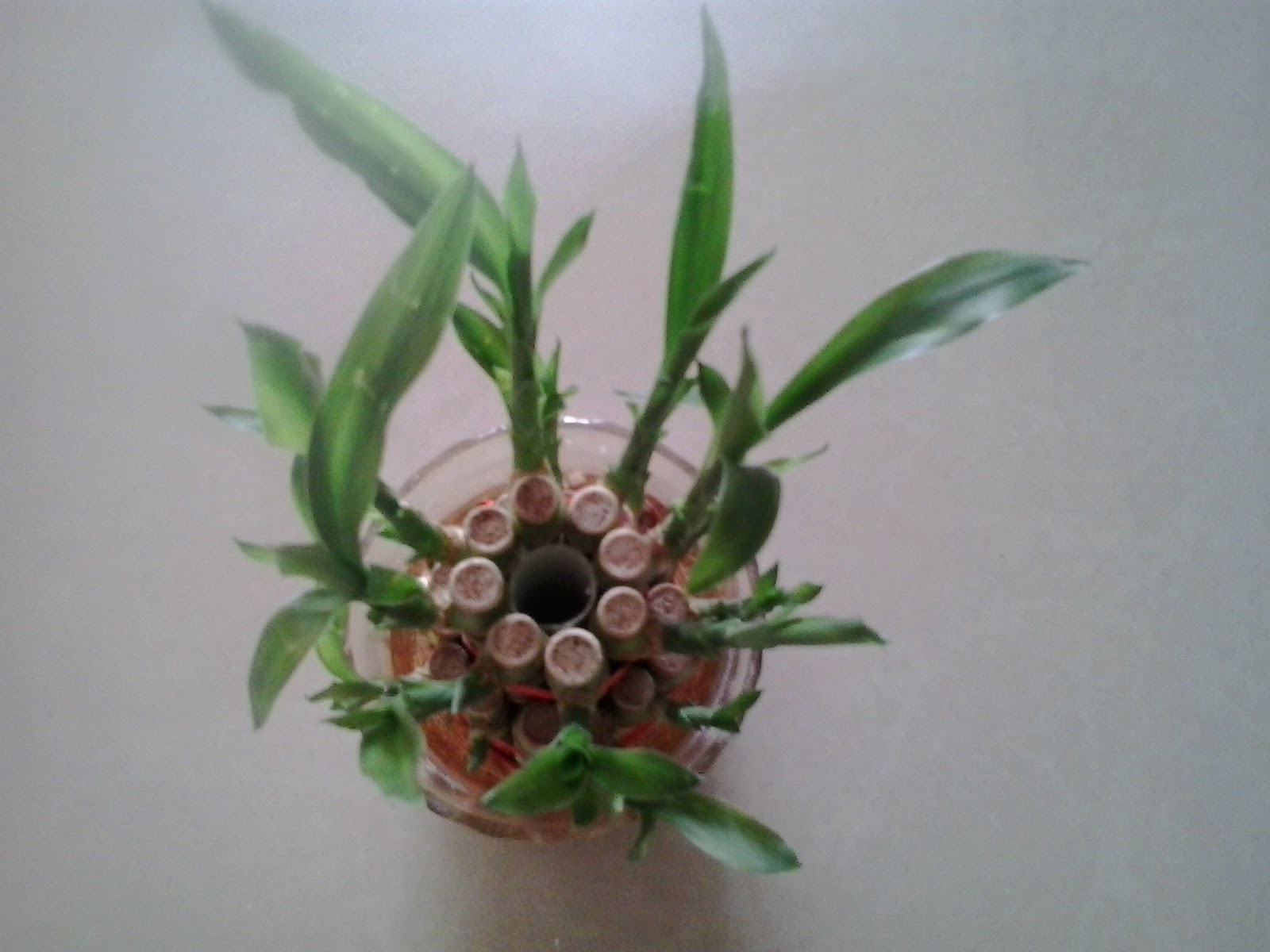
How to Grow Lucky Bamboo in your home|Lucky Bamboo plant Feng Shui and Care Tips


My cousin gifted me with a fengshui lucky bamboo plant during her last visit.so thought of blogging about this fengshui bamboo plant

As millions of "lucky" consumers around the world have discovered, Lucky Bamboo makes the perfect house or office plant.
Lucky Bamboo is one of the most popular feng shui cures. You can see feng shui lucky bamboo in most floral shops nowadays.


Have you ever wondered why garden supply stores carry such a large supply of Lucky Bamboo? The reason for its popularity is two-fold.

First, Lucky Bamboo is easy to grow and therefore a wise choice if you struggle with houseplants.

Second, Lucky Bamboo is a common décor item in Feng Shui, the ancient Chinese philosophy of aesthetics believed to bring health, wealth, and happiness with positive qi (energy flow) within your home.


What Is Lucky Bamboo?
 
Known as Lucky Bamboo for centuries, this tough resilient plant is actually Dracaena Sanderiana, a member of the lily family. A tropical plant, it is native to the rain forests of Cameroon, Africa, and Southeast Asia.


The Gift of a Lucky Bamboo Plant
 
According to ancient Oriental folklore, Lucky Bamboo plants have been given as gifts to friends and loved ones during times of celebration. A wedding, a birth, a birthday, a house-warming, a new business endeavor or just an expression of wishing someone Good Fortune are all perfect times to give gifts of Lucky Bamboo arrangements.
 
Lucky Bamboo plants have also gained international popularity because they are so easy to care for and have such a powerful significance in the art of Feng Shui.
 
Lucky Bamboo is one of the plants recommended by Feng Shui masters to improve the flow of Ch'i or life's positive energy in a room, house, or building. You can place Lucky Bamboo on the East side of your home, office, or recreation area as you face the door. Soon you will
 
So why is Feng Shui Lucky Bamboo considered lucky?
 Bamboo in itself is an amazing plant that brings a very peaceful and wise energy into your home. It teaches the ultimate wisdom: how to be flexible and hollow (open) on the inside, so that the spirit can freely flow and heal your being.
A little indoor bamboo plant is considered lucky in feng shui when it combines/represents all five feng shui elements, which are:
•Wood - the Bamboo itself
 •Earth - the Rocks the Bamboo grows in
 •Water - the Water the Bamboo grows with
 •Fire - most pots usually have a red ribbon tied to them
 •Metal - the glass pots belong to the feng shui Metal element. If the Feng Shui Lucky Bamboo is planted in a pot other than glass, such as clay or ceramics, it will usually have either a metal coin, or a metal figurine with it.
 
The Meaning of the Number of Stalks
Usually you will buy (or make) this feng shui cure with a specific number of bamboo stalks, most popular ones being:
 • 3 for Happiness
• 5 for Health
• 2 for Love & Marriage
• 8 for Wealth and Abundance
 • 9 for Good Fortune.
 
 
PLS NOTE :probably you will not see a bamboo plant with 4 stalks because the word 4 in Chinese sounds very similar to the Chinese word for death.


Care  and maintainence tips for Bamboo plant
 
The popularity of Lucky Bamboo has continued to grow over the past several decades, making it one of the most popular house plants of the time.These easy-to-grow plants require very little care and generally are grown using hydroponics methods.

 
 How To care for Lucky Bamboo
  • To start, you'll need a plant. Any size plant will do to start, but make sure it smells fresh, as a bad odor indicates poor health.
  • Next, find a pot that is about 2 inches bigger in diameter than the plant. You can use a sealed pot and grow it in pure water, or you can plant it in soil in a pot with a drain hole.
  • If you are growing it in standing water, you will need some pebbles to hold it upright. If in soil, try mixing 1/3rd each of sand, peat moss, and regular soil to ensure excellent drainage.
  •  If you are growing it in standing water, it is best to keep the water level one inch above the top of the supporting pebbles. But you will need to change the water at least once per week to prevent the plant from rotting. It is a good idea to rinse the vase, pebbles, and plant each time you do this.
  •  If you are growing the plant in soil, let the soil get damp (as opposed to wet or dry) between watering. Then water the plant heavily so that the soil is fully saturated.
  • you will need to place it in a location with indirect light
  • Keep water fresh by changing it every week, and always keep water levels at approximately an inch from the base of the canes.
  • Lucky Bamboo prefers plenty of indirect sunlight and room temperatures at 65-70o.
  • Although opinions differ on feeding, your Lucky Bamboo is a living organism, Add a very light fertilizer periodically. Too much fertilizer is worse than none at all, so use it sparingly. This is especially true of potted plants because the fertilizer will not become diluted by rain and can not run off like it will for plants in the ground.Since growth can be controlled by feeding, small amounts of fertilizer will keep the plant at a manageable size.
  • Also, it is best to let tap water stand in a separate container for 24 hours before using it for the bamboo plant. This is because the chlorine and fluoride in the water needs to dissipate. Too much of these chemicals can cause yellowing or browning of the bamboo leaves.


  •   

Thursday, 9 May 2013

Aboli Flower| Crossandra - firecracker- Kanakambaram Flower


Today I am posting a very popular tropical flower known as Aboli  in marathi or Firecracker in english . my mom had planted aboli seeds during her last visit in a small mug .Last month this plant started flowering & i took step by step snaps while flowers were blooming.

Crossandra infundibuliformis (firecracker flower), is a species of flowering plant in the family Acanthaceae, native to southern India and Sri Lanka.


Description

It is an erect, evergreen subshrub growing to 1 m (3 ft 3 in) with glossy, wavy-margined leaves and fan-shaped flowers, which may appear at any time throughout the year. The flowers are unusually shaped with 3 to 5 asymmetrical petals. They grow from four-sided stalked spikes, and have a tube-like ¾ inch stalk. Flower colours range from the common orange to salmon-orange or apricot, coral to red, yellow and even turquoise.

This is basically a bush. 
 
Name

The common name "firecracker flower" refers to the seed pods, which are found after the flower has dried up, and tend to "explode" when near high humidity or rainfall. The "explosion" releases the seeds onto the ground, thereby creating new seedlings. It is popularly known as Kanakambaram in Tamil (கனகாம்பரம்), Malayalam and Telugu and Kanakambara in Kannada.


Cultivation

This plant requires a minimum temperature of 50 °F (10 °C), and in temperate regions is cultivated as a houseplant. It is usually grown in containers but can be attractive in beds as well. The flowers have no perfume but stay fresh for several days on the bush. A well-tended specimen will bloom continuously for years. It is propagated by seeds or cuttings.This plant grows from seeds that come after each bloom. At the end of the flowering bunch when the flowers have dried one can see dried tiny seeds . The plant can be grown with these seeds.
 
uses
usesThe tiny flowers are often strung together into strands, sometimes along with white jasmine flowers and therefore in great demand for making garlands which are offered to temple deities or used to adorn women’s hair.In maharashtra & south you will find many ladies wearing these flowers in hair in the form of gajra or veni. Aboli flowers look very beautiful and bright fresh orange and peach coloured flowers.They are available very cheap and can be purchased from any flower seller. These flowers grow in bunches and hence each stem will give a good produce of aboli flowers. 


Thursday, 24 January 2013

Gulbakshi flower - Twin flower - four o clock flower- Mirabis jalapa


Last time I had got a bunch of gulbakshi flowers from alibag .I had planted them in my kitchen garden .Soon the bud germinated & started growing  & within 3 weeks I saw beautiful gulbakshi flower blooming in my bangalore gallery.


Coming back  to gulbakshi plant --- few information from wiki

Mirabilis jalapa (The four o'clock flower or marvel of Peru) is the most commonly grown ornamental species of Mirabilis, and is available in a range of colours. Mirabilis in Latin means wonderful and Jalapa is a not uncommon placename in Central and North America. Mirabilis jalapa is said to have been exported from the Peruvian Andes in 1540.

 curious aspect of this plant is that flowers of different colors can be found simultaneously on the same plant.


Different color variation in the flower and different color flowers in same plant.
Variegated flower on a four o'clock plant.Naturally occurring color variation on four o'clock flowers.


Additionally, an individual flower can be splashed with different colors. Another interesting point is a color-changing phenomenon. For example, in the yellow variety, as the plant matures, it can display flowers that gradually change to a dark pink color. Similarly white flowers can change to light violet.A four o'clock plant in full bloom.


The flowers usually open from late afternoon onwards, then producing a strong, sweet-smelling fragrance, hence the first of its common names. 


VARIOUS NAMES

 
The flowers usually open from late afternoon onwards, then producing a strong, sweet-smelling fragrance, hence the first of its common names. In Pakistan it is called "Gul Abas" (Urdu: گل عباس‎). In Sri Lanka it is called "Hendirikka". In Southern India it is called "Anthi Mandhaarai" (Tamil: அந்தி மந்தாரை). In Andhra Pradesh it is called "Chandrakantha"(Telugu: చ౦దరకా౦త). In Kerala it is called 'Naalumani poovu' (Malayalam: നാലുമണിപ്പൂ, പതിറ്റടിമുല്ല). In Maharashtra it is called "Gulabakshi" (Marathi: गुलबक्षी). In Assamese it is called 'Godhuli Gopal', 'godhuli' meaning evening. In Bengali it is called "sandhyamaloti" (সন্ধ্যামালতি).In Maithili it is called "sanjhaa phool" as it blooms in evening . In Oriya it is called 'Rangani'. In China it is called the "shower flower" (Chinese: 洗澡花; pinyin: xǐzǎo huā) or "rice boiling flower" (simplified Chinese: 煮饭花; traditional Chinese: 煮飯花; pinyin: zhǔfàn huā) because it is in bloom at the time of these activities. In Hong Kong it is known as "purple jasmine" (紫茉莉). The Turkish name is "akşam sefası", which means "evening pleasure"


The plant does best in full sun. It grows to approximately 0.9 m in height. The single-seeded fruits are spherical, wrinkled and black upon maturity (see picture), having started out greenish-yellow. The plant will self-seed, often spreading rapidly if left unchecked in a garden.


Uses

The flowers are used in food colouring.
An edible crimson dye is obtained from the flowers to colour cakes and jellies.

In herbal medicine, parts of the plant may be used as a diuretic, purgative, and for vulnerary (wound healing) purposes. The root is believed an aphrodisiac as well as diuretic and purgative. It is used in the treatment of dropsy.

The leaves are used to reduce inflammation. A decoction of them (mashing and boiling) is used to treat abscesses. Leaf juice may be used to treat wounds.

Powdered, the seed of some varieities is used as a cosmetic and a dye.