Monday, 24 June 2013

Kulcha recipe|punjabi plain kulcha without yeast|easy kulcha


Kulcha (Urdu: کلچه‎, Hindi: कुलचा; Punjabi: ਕੁਲਚਾ) kulcā is a type of leavened flatbread eaten in South Asia, made from maida (wheat flour). It is particularly popular in India and Pakistan, and is usually eaten with chole.

Kulcha is a typical Punjabi and Kashmiri recipe. Amritsar, a city in Punjab is famous for its Amritsari kulchas or Amritsari naan. Flour dough is rolled into a flat, round shape and baked in an earthen clay oven until golden brown. When baked, it is usually rubbed with butter, and then eaten with spicy chole (chickpea curry).


Kulcha now can also be prepared easily at home with this simple plain kulcha recipe.

kulcha can be made plain or stuffed.

you can also stuff kulcha with potato filling ,onion, paneer or pudina (mint)

If you like stuffed kulchas check out below recipes

Amritsari Aloo kulcha
Amritsari onion kulcha
Mint/pudina kulcha


Ingredients for Kulcha

Maida /all purpose flour - 3 cups -( 400 gms)
Baking soda - 1/3 tea spoon.
Baking powder - 1/2 tea spoon.
Sugar - 3 tea spoon.
Oil - 1 table spoon.
Curd - 3 table spoon.
Salt - 3/4 tea spoon (according to the taste)


Garnish
chopped coriander - 1 table spoon.
 cumin seeds (jeera) /carom seeds(ajwain-owa)  /black til (nigella seeds) - 1/2 cup


Method -
1.Sieve the maida in a bowl and add baking soda and baking powder into it. Mix the ingredients well.
2.Make a well at the center of maida . Now add curd, salt, sugar and oil at the center and mix them well with the flour. Now knead it with luke warm water to make a smooth dough. Flip, turn and punch the dough for 5 minutes to make it smooth and elastic.3
3. Apply oil on the dough with hands on all the corners and cover it with a clean towel. Keep the bowl at a warm place for 2-3 hours(minimum 1 hour)

4. dough will rise and double up after 2 hours.knead the dough once again with hands to fix it. The dough to make kulcha is ready.
 5.Divide the dough into equalround balls. Meanwhile, take one ball  of the dough and roll it into a flat disc of 5-7 inches.


6 Sprinkle some cumin seeds (jeera) /carom seeds(ajwain-owa)  /black til (nigella seeds)  + chopped coriander on the rolled out kulcha and press with hands to fix them.


7.Now put the kulcha on a heated tava (griddle)  facing it upwards. Flip the side of the kulcha once the bubbles starts to form at the upper surface or rises up.


8.Apply some ghee/butter/oil  on the kulcha when the surface turns light brown in colour. Roast the kulcha till it turns brown from both the sides.


9.Serve the kulcha with chole, sliced onion , curd or pickle.

How to Grow Lucky Bamboo in your home|Lucky Bamboo plant Feng Shui and Care Tips


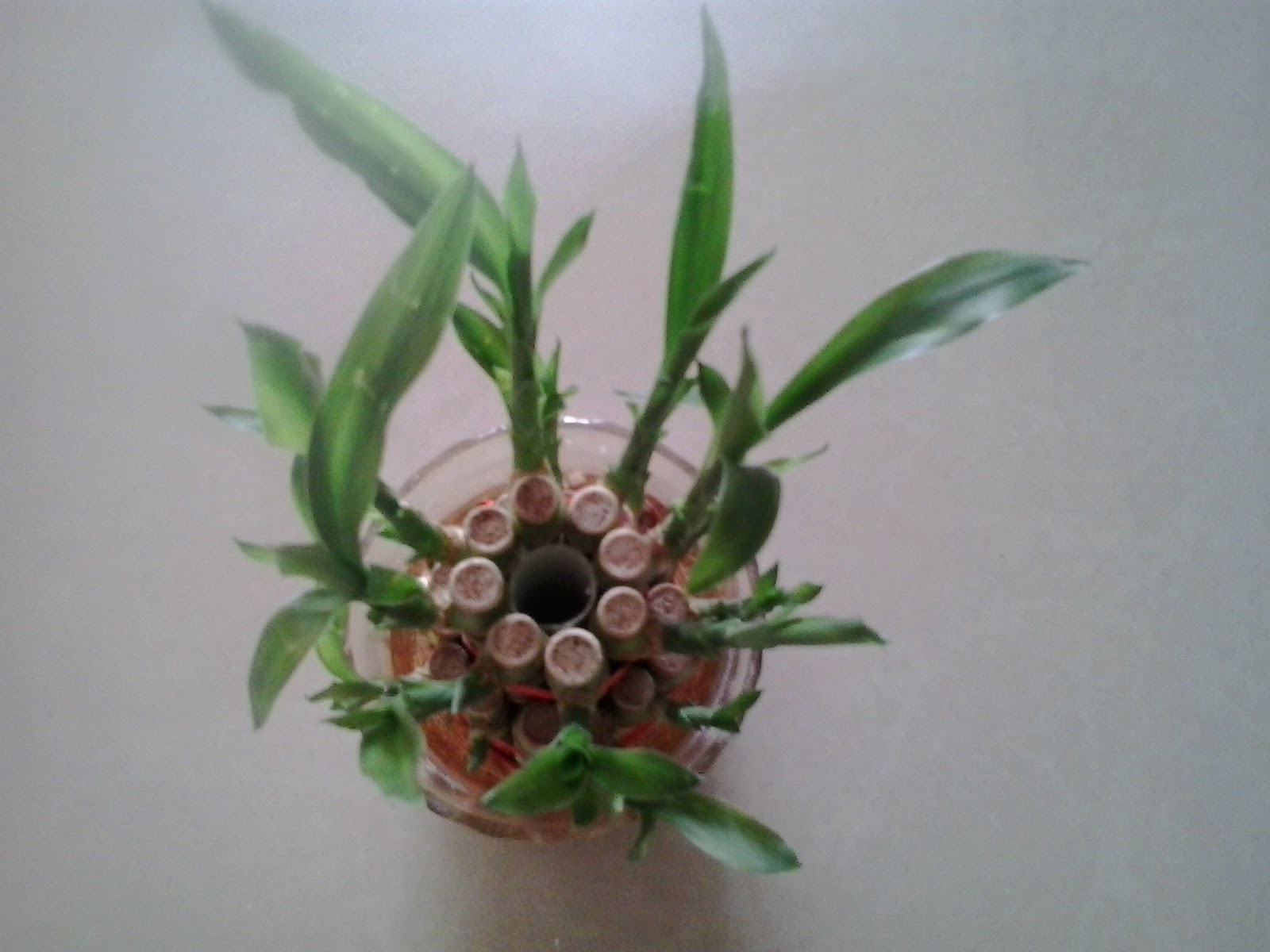
My cousin gifted me with a fengshui lucky bamboo plant during her last visit.so thought of blogging about this fengshui bamboo plant

As millions of "lucky" consumers around the world have discovered, Lucky Bamboo makes the perfect house or office plant.
Lucky Bamboo is one of the most popular feng shui cures. You can see feng shui lucky bamboo in most floral shops nowadays.


Have you ever wondered why garden supply stores carry such a large supply of Lucky Bamboo? The reason for its popularity is two-fold.

First, Lucky Bamboo is easy to grow and therefore a wise choice if you struggle with houseplants.

Second, Lucky Bamboo is a common décor item in Feng Shui, the ancient Chinese philosophy of aesthetics believed to bring health, wealth, and happiness with positive qi (energy flow) within your home.


What Is Lucky Bamboo?
 
Known as Lucky Bamboo for centuries, this tough resilient plant is actually Dracaena Sanderiana, a member of the lily family. A tropical plant, it is native to the rain forests of Cameroon, Africa, and Southeast Asia.


The Gift of a Lucky Bamboo Plant
 
According to ancient Oriental folklore, Lucky Bamboo plants have been given as gifts to friends and loved ones during times of celebration. A wedding, a birth, a birthday, a house-warming, a new business endeavor or just an expression of wishing someone Good Fortune are all perfect times to give gifts of Lucky Bamboo arrangements.
 
Lucky Bamboo plants have also gained international popularity because they are so easy to care for and have such a powerful significance in the art of Feng Shui.
 
Lucky Bamboo is one of the plants recommended by Feng Shui masters to improve the flow of Ch'i or life's positive energy in a room, house, or building. You can place Lucky Bamboo on the East side of your home, office, or recreation area as you face the door. Soon you will
 
So why is Feng Shui Lucky Bamboo considered lucky?
 Bamboo in itself is an amazing plant that brings a very peaceful and wise energy into your home. It teaches the ultimate wisdom: how to be flexible and hollow (open) on the inside, so that the spirit can freely flow and heal your being.
A little indoor bamboo plant is considered lucky in feng shui when it combines/represents all five feng shui elements, which are:
•Wood - the Bamboo itself
 •Earth - the Rocks the Bamboo grows in
 •Water - the Water the Bamboo grows with
 •Fire - most pots usually have a red ribbon tied to them
 •Metal - the glass pots belong to the feng shui Metal element. If the Feng Shui Lucky Bamboo is planted in a pot other than glass, such as clay or ceramics, it will usually have either a metal coin, or a metal figurine with it.
 
The Meaning of the Number of Stalks
Usually you will buy (or make) this feng shui cure with a specific number of bamboo stalks, most popular ones being:
 • 3 for Happiness
• 5 for Health
• 2 for Love & Marriage
• 8 for Wealth and Abundance
 • 9 for Good Fortune.
 
 
PLS NOTE :probably you will not see a bamboo plant with 4 stalks because the word 4 in Chinese sounds very similar to the Chinese word for death.


Care  and maintainence tips for Bamboo plant
 
The popularity of Lucky Bamboo has continued to grow over the past several decades, making it one of the most popular house plants of the time.These easy-to-grow plants require very little care and generally are grown using hydroponics methods.

 
 How To care for Lucky Bamboo
  • To start, you'll need a plant. Any size plant will do to start, but make sure it smells fresh, as a bad odor indicates poor health.
  • Next, find a pot that is about 2 inches bigger in diameter than the plant. You can use a sealed pot and grow it in pure water, or you can plant it in soil in a pot with a drain hole.
  • If you are growing it in standing water, you will need some pebbles to hold it upright. If in soil, try mixing 1/3rd each of sand, peat moss, and regular soil to ensure excellent drainage.
  •  If you are growing it in standing water, it is best to keep the water level one inch above the top of the supporting pebbles. But you will need to change the water at least once per week to prevent the plant from rotting. It is a good idea to rinse the vase, pebbles, and plant each time you do this.
  •  If you are growing the plant in soil, let the soil get damp (as opposed to wet or dry) between watering. Then water the plant heavily so that the soil is fully saturated.
  • you will need to place it in a location with indirect light
  • Keep water fresh by changing it every week, and always keep water levels at approximately an inch from the base of the canes.
  • Lucky Bamboo prefers plenty of indirect sunlight and room temperatures at 65-70o.
  • Although opinions differ on feeding, your Lucky Bamboo is a living organism, Add a very light fertilizer periodically. Too much fertilizer is worse than none at all, so use it sparingly. This is especially true of potted plants because the fertilizer will not become diluted by rain and can not run off like it will for plants in the ground.Since growth can be controlled by feeding, small amounts of fertilizer will keep the plant at a manageable size.
  • Also, it is best to let tap water stand in a separate container for 24 hours before using it for the bamboo plant. This is because the chlorine and fluoride in the water needs to dissipate. Too much of these chemicals can cause yellowing or browning of the bamboo leaves.


  •   

Sunday, 23 June 2013

Sabudana batata poori | potato sago puri


Fasting or vrat or upwas is a regular phenomenon in my house thats the reason you will find a variety of fasting dishes /phalahari recipes on my site.

Coming with a fasting recipe after a long break.

Todays recipe is Sabudana batata poori or potato sago poori.

sabudana is known as tapioca in english & batata or aloo means potato.the binding agent used here is  either rajgira flour (amaranth flour)  or upwas bhajani flour or singhada ata (water chestnut flour) or bhagar ata  which are commonly used in fasting food in india

Upwas bhajani is easily available in mumbai but you can make it at home too .

you can check upwas bhajani recipe here


This poori made from aloo and sabudana can be eaten on fasting days .

serve it with fasting coconut chutney or upwas dahi peanut chutney .


Ingredient

1 cup Sabudana (sago/tapioca)
1/2 cup Peanuts (roasted & crushed coarsely)
1-2 medium Potato (boiled, peeled & grated )  about1  cup
3-4 Green Chilies (crushed)  (add chillies as per your spice level)
1-2 tspn roasted cumin seeds  
 tsp cumin powder
pinch of sugar
1 tsp lemon juice
2 tbsp coriander leaves
1/2 cup rajgira flour (amaranth flour) / upwas bhajani flour /singhada ata (water chestnut flour)
1/3 to 3/4 cup
Salt to taste
Oil to fry


Method :


1.Wash sago thoroughly and drain excess water. Soak it for 2-3 hours with water level just half cm to the level of sago ( See tip 3) .Remove potato cover and grate it finely.

2. Add all ingredients to it except oil. Mix well into a dough.

3. Grease a plastic paper with little oil .now take a small piece of dough in your hand  & place it on greased plastic & flatten it to thick poori with your greased fingers .do not make the poori too thin or else it can break in oil. you can even make a hole in centre of poori to make it appear like vada .


4.Keep the oil in a deep frying pan to heat. deep fry the flattened poori in oil till golden brown on both sides.


5. Fry till they are crisp and light brown in colour.


6. Drain them well on a tissue paper.  Serve with  fasting peanut chutney or dahi chutney.


Tips

1 Fry poori when the oil is piping hot to get crispy poori .
2 Add more rajgira flour (amaranth flour) / upwas bhajani /singhada ata (water chestnut flour) if pooris tend to break in oil.
3.The correct amount of water for soaking sago is important as if you add more water sago becomes sticky & if you add less water it becomes dry.


Saturday, 22 June 2013

Rogan josh recipe | Chicken roghan josh Kashmiri pandit style

 
Rogan josh (or roghan josh) is an aromatic lamb dish of Persian origin, which is one of the signature recipes of Kashmiri cuisine.
 Rogan (روغن) means "oil" in Persian, while josh (جوش) means "heat, hot, boiling, or passionate"
 
Rogan josh thus means cooked in oil at intense heat.
 
 Another interpretation of the name rogan josh is derived from the word rogan meaning "red color" (the same Indo-European root that is the source of the French "rouge" and the Spanish "rojo") and josh meaning passion or heat.


Rogan josh was brought to Kashmir by the Mughals, whose cuisine was in turn influenced by Persian cuisine. The unrelenting summer heat of the Indian plains took the Mughals frequently to Kashmir, which has a cooler climate because of its altitude.
 
 
Rogan josh (or roghan josh) is a staple of Kashmiri cuisine: originally it was brought to Kashmir by the Mughals. It is one of the main dishes of the Kashmiri multi-course meal (the "Wazwan").
 
 It consists of braised boneless lamb chunks cooked with a gravy based on browned onions or shallots, yoghurt, garlic, ginger and aromatic spices (cloves, bay leaves, cardamom, cinnamon).
 
Its characteristic brilliant red color traditionally comes from liberal amounts of dried Kashmiri chiles that have been de-seeded to reduce their heat: these chillies (whose flavor approximates that of paprika) are considerably milder than the typical dried cayenne chiles of Indian cuisine.
 
The recipe's spiciness is one of fragrance rather than heat, and the traditional dish is mild enough to be appreciated by Western palates that may not have been conditioned to tolerate the heat of chillies. In addition, dried flowers or root of Alkanna tinctoria are used in some variants of the recipe to impart a crimson color. Saffron is also part of some traditional recipes.

While the traditional preparation uses whole dried chillies that are de-seeded, soaked in water, and ground to a paste, non-traditional short cuts use either Kashmiri chili powder (available in Indian stores) or a mixture of paprika (predominantly) and cayenne pepper, adjusted to taste.


A modified version of the dish is yogurt based but referred to by a slightly different name "Hindi Rogan Josh".

There has been commercial modification worldwide; in particular, a tomato-based lamb dish that imitates rogan josh while reducing cooking time and imparting a reddish color to the dish. Tomato, however, adds a flavor profile that, while fully acceptable, is distinct from that of the traditional dish


The authentic Roganjosh is made with no onions and garlic and the gravy is cooked in  creamy yogurt with a mixture of several spices. The main spice used in the recipe is Kashmiri Mirch or red pepper from Kashmir. They are not very hot but give this vibrant red color to the dish. Its made with  lamb or mutton. but I used chicken
I have followed exact recipe from ajoy joshi

Only difference is  i didnt get ratanjot so i infused   2 tsp kashmiri chilli powder in 1 tbsp oil to get the bright red colour effect.
 
For all those wondering about ratan jot:-
Rattan jot is the root of a herb used for its red colour. Soak a marble-sized piece in hot oil or lukewarm water.


Ingredients
250 grms bonless chicken marinated with ginger garlic paste
marinade
½ tsp ground cinnamon
½ tsp ground green cardamoms
½ tsp ground black cardamoms
¼ tsp ground cloves
½ tsp ground black peppercorn
½ tsp ground fennel seeds
½ tsp ground Kashmiri chillies

Other ingredients
½ cup vegetable oil
1-inch cinnamon stick
2–4 whole black cardamoms
4–6 whole green cardamoms
6–8 cloves
1tsp peppercorns
1tsp fennel seeds
1tsp ground asafoetida
1½ tsp dry ginger powder
salt, to taste
1  tbs Kashmiri chilli powder
rattan jot infused in hot oil (see tip 1) /  2 tsp kashmiri chilli powder infused in 1 tbsp oil
2 cups whole-milk yoghurt, whisked


method
1.Wash clean boneless chicken and cut it into half inch pieces add ginger garlic paste & keep aside
 
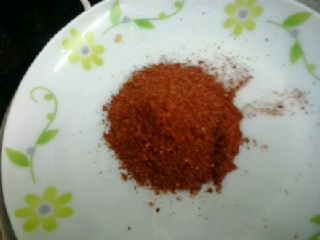
2.Original recipe used individual grinded spice but i was short of time so i dry roasted all below spices & grind them to  a powder in mixer.


ROGAN JOSH SPICE MIX


3.Marinate the chicken  with all the ground spices and set aside for a 20-30 minutes.
4In a kadhai  heat the oil over high heat until it starts smoking.


5.Reduce heat and add cinnamon and black and green cardamoms  cloves and peppercorns ,fenenl seeds  and marinated chciken  and mix chicken so it is coated with the oil. Cook until chicken is caramelised for 2 minutes


6.Add the asafoetida and the ground ginger and fold into the chicken and cook for 1 minute.now add salt


7.Next, add the Kashmiri chill powder and mix into the chicken.now add rattan jot infusion/2 tsp kashmiri chilli powder infused in 1 tbsp oil


kashmiri chili powder infused in hot oil/replacement for ratanjot


8 Finally,mix the yoghurt into pan till it thoroughly coats the chicken.add little water if required
 

9.Cover the pan and cook for about 1½ hours, or until the chicken is cooked and the rogan (red oil) floats on the surface.

9. Serve with roti /naan /pav and steamed, Basmati rice along with lemon wedges


Tip
1 .Rattan jot is the root of a herb used for its red colour. Soak a marble-sized piece in hot oil or lukewarm water. i didnt get ratanjot so i infused   2 tsp kashmiri chilli powder in 1 tbsp warm oil to get the bright red colour